
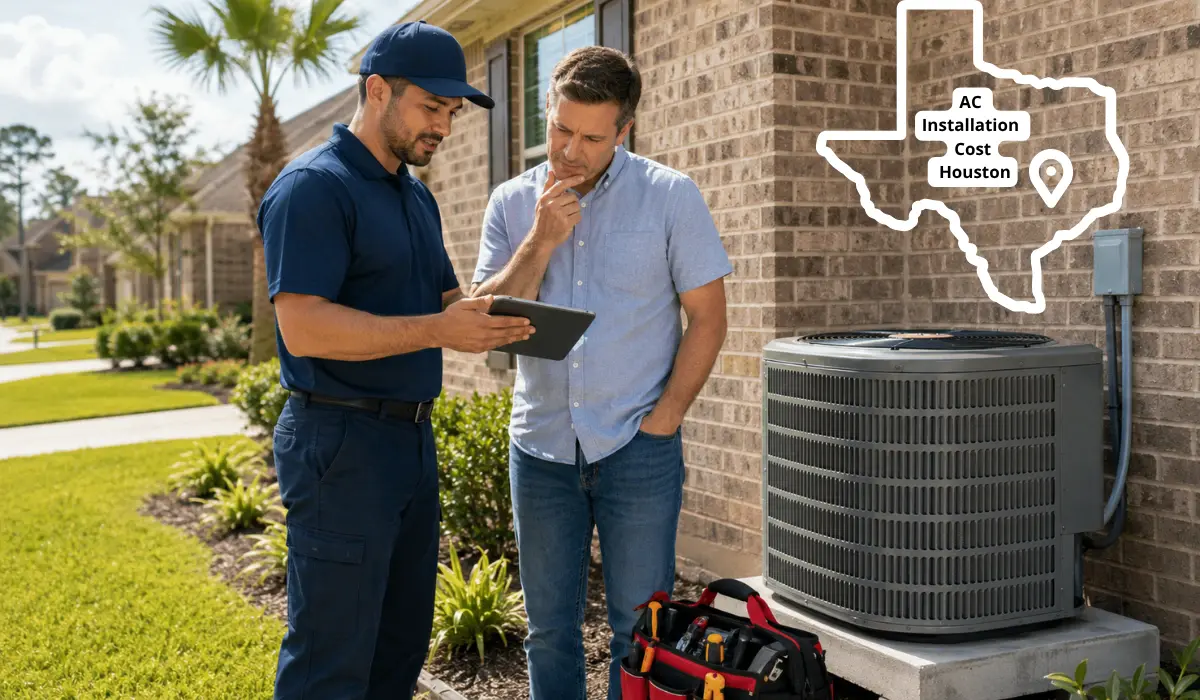
Houston is a hot area; the summer can reach 90°F to 105°F. So, living without an AC is a nightmare. But whenever you think of getting an ac first question that probably comes to mind is, “How much is an AC installation going to cost?”
Typically, AC installation costs range from $4,000 to $12,000. But it isn’t any fit answer. It varies depending on factors such as your home’s size, the system’s energy efficiency, and the complexity of the installation.
Every home has different cooling needs, which means installation costs can vary significantly. To help you plan your budget, here’s an overview of typical AC installation costs from The Chill Brothers.
| TL;DR AC installation in Houston typically costs $4,500–$12,000 (around $7,500 for an average home). The final price depends on home size, SEER rating, brand, ductwork condition, and labor needs. Hidden costs like duct repairs, electrical upgrades, permits, and labor can increase the total. |
AC Installation Cost Houston Based On Brands, SEER, Home Size, Efficiency Ratings, Size/Unit
The AC installation cost isn’t fixed; it varies depending on all the things, such as:
| Category | Item | Equipment / Part Cost | Installed Cost | Notes |
| Brand | Aire Flow (2.5 Ton) | $2,040 | $3,980 | Standard home system |
| Brand | Amana (2.5 Ton) | $3,360 | $5,680 | Mid-range brand |
| Brand | American Standard (2.5 Ton) | $3,900 | $7,170 | Premium tier |
| Brand | Armstrong (2.5 Ton) | $2,730 | $4,690 | Budget friendly |
| Brand | Bryant (2.5 Ton) | $3,170 | $5,390 | Mid range |
| Brand | Carrier (2.5 Ton) | $4,420 | $7,780 | High end |
| Brand | Coleman (2.5 Ton) | $2,520 | $4,250 | Budget |
| Brand | Comfortmaker (2.5 Ton) | $2,360 | $4,220 | Affordable |
| Brand | Frigidaire (2.5 Ton) | $3,398 | $6,200 | Mid range |
| Brand | Gibson (2.5 Ton) | $2,980 | $5,070 | Mid range |
| Size | 1.5 Ton (18,000 BTU) | $1,880 | $3,790 | Small homes |
| Size | 2 Ton (24,000 BTU) | $2,980 | $5,380 | Small homes |
| Size | 2.5 Ton (30,000 BTU) | $3,050 | $5,390 | 1400–1800 sq ft |
| Size | 3 Ton (36,000 BTU) | $3,300 | $5,980 | Medium homes |
| Size | 3.5 Ton (42,000 BTU) | $3,560 | $6,500 | Large homes |
| Size | 4 Ton (48,000 BTU) | $3,720 | $6,700 | Large homes |
| Size | 5 Ton (60,000 BTU) | $3,840 | $7,180 | Very large homes |
| Efficiency | 13–14 SEER | $2,870 | $5,540 | Standard efficiency |
| Efficiency | 15–16 SEER | $1,860 | $7,120 | Energy efficient |
| Efficiency | 17–18 SEER | $4,400 | $8,500 | High efficiency |
| Efficiency | 19–21 SEER | $5,700 | $10,580 | Super high efficiency |
| Efficiency | 22–24 SEER | $7,360 | $13,500 | Top tier |
Central AC Installation Cost Houston
Central AC installation in Houston typically costs between $4,500 and $12,000, including both equipment and labor. Homeowners usually spend around $7,500 for an average 2,000 square foot home.
However, the final price is not fixed. It depends on your home size and the system’s efficiency (SEER rating). Even the existing ductwork or other components that need upgrades or replacement influence the AC price, for example:
| Category | Type / Home Size | Cost Range | Notes |
| Home Size | 1,500 sq. ft. | $3,500 – $6,000 | Smaller homes, lower tonnage systems |
| Home Size | 2,000 sq. ft. | $4,500 – $7,500 | Average Houston home (~$7,500 typical) |
| Home Size | 2,500 sq. ft. | $5,000 – $8,500 | Medium to large homes |
| Home Size | 3,000 sq. ft. | $6,500 – $9,500 | Larger homes, higher capacity systems |
| System Type | Standard Efficiency (14–16 SEER) | $4,500 – $7,500 | Best balance of cost and performance |
| System Type | High Efficiency (17+ SEER) | $6,000 – $10,000+ | Lower energy bills, higher upfront cost |
| System Type | High Tonnage / Variable Speed | $9,000 – $14,000+ | Premium systems for large homes |
The Hidden Costs of AC Installation Most Homeowners Miss
Different locations require different levels of attention during installation. The Houston Heights area needs different attention from the area of Central Northwest. That’s why people sometimes miss some things, as in:

Ductwork Repairs
Ductwork repairs usually cost between $300 and $1,200 because The Chill Brothers technician must check, seal, and sometimes replace sections of the air distribution system.
This is necessary because leaky ducts can waste 20–30% of cooled air before it even reaches your rooms. That means your AC runs longer, your energy bills go up, and some rooms may never feel properly cool.
If you ignore duct issues, you may experience uneven cooling, hot spots in your home, and constant strain on your AC system. Over time, this can shorten your unit’s lifespan. Before we install a new AC unit, we check the duct size using a calculator.
Full Duct Replacement
A full duct replacement typically costs $2,500 to $7,500 because it involves removing the entire old duct system and installing a new one sized correctly for your home.
This becomes necessary when the existing ductwork is undersized, collapsed, or too old to repair. Even if the AC unit is new, bad ductwork will prevent it from performing properly. We often encounter this issue while working in Southeast Houston.
Because the area has so many plants, homeowners think their ducts are okay. But it’s not!
If skipped, the system will struggle with airflow, leading to high humidity, poor cooling performance, and higher electricity usage. In severe cases, it can even cause the compressor to overwork and fail early.
Labor Cost
Labor cost typically makes up 30% to 60% of the total installation price. This includes the time and expertise required to remove old equipment, install new systems, connect electrical wiring, set up refrigerant lines, test airflow, and ensure everything meets local building codes.
Labor becomes more expensive when the job is complex, such as attic installations, duct modifications, electrical upgrades, or system relocations.
Even if equipment prices look affordable, labor can significantly increase the final cost.
Electrical Panel Upgrades
Electrical panel upgrades usually range from $800 to $2,500, depending on your home’s capacity and how much load the new AC system requires.
This upgrade is necessary because modern AC units draw more consistent and sometimes higher electrical loads. If your panel is outdated, it may not handle the demand safely.
If ignored, you can face breaker trips, system shutdowns during peak summer heat, or even electrical hazards. In worst cases, it can become a fire risk due to overloaded circuits.
Thermostat Upgrades
Thermostat upgrades typically cost $120 to $400 because newer systems require compatible control technology. Modern AC systems often use advanced communication or smart controls that older thermostats cannot support. Without upgrading, the system may not run at full efficiency.
If you keep an old thermostat, you may experience inaccurate temperature readings, poor humidity control, and wasted energy.
You also lose access to energy saving features like scheduling and remote control.
Condensate Drain Improvements
This drain improvement costs $150 to $600 because technicians may need to clean, repair, or redesign the drainage system. It is necessary because every AC produces moisture, and if that water doesn’t drain properly, it can back up into your system or home.
If ignored, it can lead to water leaks, ceiling damage, mold growth, and indoor humidity problems. Over time, this can also damage drywall and flooring, resulting in costly repairs.
Permit Fees
Permit fees typically range from $250 to $600 because they are required by local Houston building codes. Permits ensure that your installation meets safety and efficiency standards. They also protect homeowners during inspections and future home sales.
If skipped, you may face failed inspections, fines, or issues when selling your home. Some insurance companies may also deny claims if the installation was not permitted properly.
Tips to Reduce AC Installation Cost in Houston
AC installation in Houston can get expensive fast, especially when hidden upgrades like ductwork, electrical work, or permits are required. But the good news you can reduce the total cost with the right planning before installation starts, as in:

- Get a Proper Load Calculation Before Buying
- Repair Ductwork Instead of Replacing It (If Possible)
- Choose the Right SEER Rating
- Replace Only What Is Necessary
- Schedule Installation in Off-Season
- Get Multiple Quotes From Licensed Contractors
The main point is that small home improvements before installation can reduce labor time and extra charges.
Should You Negotiate With Contractors About Installation Cost?
Yes, in most cases, you can and should discuss pricing with your HVAC contractor. Cause AC installation is not a fixed-price product like something on a shelf.
It’s a custom job, and there’s often some flexibility depending on system choice, scope of work, and installation conditions. So, you should definitely negotiate the quote.
But don’t be like “asking for a discount.”
First of all, understanding what’s included in the price and where adjustments can be made. A good contractor will walk you through options instead of cutting corners.
Here are a few smart ways homeowners usually negotiate:
- Ask if there are different equipment brands or SEER options within your budget
- Request a breakdown of labor vs. equipment cost so you understand pricing clearly
- Check if seasonal promotions or rebates are available
- Ask about removing or delaying non-critical upgrades (if safe and code compliant)
- Compare multiple estimates before making a final decision
- Ask if financing options can reduce upfront pressure
For example, instead of saying “make it cheaper,” a better way is:
- “What options do I have if I want to stay closer to a $5,000–$7,000 budget?”
- “Is there a more cost effective system that still fits my home size?”
- “What upgrades are optional versus required for installation?”
At the same time, it’s important to remember that quality installation matters more than cutting corners. The lowest bid isn’t always the best value if it leads to future repair costs or efficiency issues.
However, we always try to offer fair and affordable AC installation pricing in Houston, with transparent breakdowns and flexible options.
Conclusion
AC installation costs in Houston vary based on brand, size, efficiency, and the condition of your home’s existing system. Extra work, such as duct repairs, electrical upgrades, and labor, can also affect the final price.
The best way to plan is to understand these factors upfront so you can avoid surprise costs and choose the right system for your home. A proper installation ensures better cooling, lower energy bills, and long term reliability.
Frequently Asked Questions (FAQs)
How long does an AC installation take in Houston?
Most standard central AC installations take 6 to 12 hours, depending on the system type and home conditions. If ductwork, electrical upgrades, or major modifications are needed, the installation can take 1–2 days.
Do I need to replace my ductwork when installing a new AC?
Not always. If your duct system is in good condition and properly sized, it can be reused. However, if there are leaks, poor airflow, or old undersized ducts, replacement or repairs may be necessary for proper performance.
What size AC unit do I need for my home?
The right AC size depends on a load calculation, not just square footage. Factors like insulation, ceiling height, windows, and sun exposure all matter. In Houston, most homes range between 2 to 4 tons, but only a proper load test gives an accurate answer.
Is a higher SEER rating always better?
Higher SEER systems are more energy efficient, but they also cost more upfront. In Houston’s hot climate, a 16–18 SEER system is usually the best balance between cost and long term energy savings.
Can I install a new AC system without upgrading my electrical panel?
Yes, but only if your existing panel can handle the load safely. Older homes often require upgrades to support modern systems. A technician will inspect this before installation.
What happens if AC installation is done incorrectly?
Poor installation can cause serious issues like low airflow, refrigerant leaks, frequent breakdowns, higher energy bills, and even early system failure. In many cases, installation quality affects performance more than the brand itself.
Do I need a permit for AC installation in Houston?
Yes, most central AC installations require a permit to meet local building codes. This ensures the system is installed safely and passes inspection requirements.

I’m Francis Kaspar, a 35-year-old HVAC technician with over 10 years of experience in the industry. I hold a certification in HVAC technology from Texas State Technical College, where I gained hands-on skills that shaped my career.
Currently, I’m working at The Chill Brothers, specializing in AC installation, repair, and energy-efficient solutions. Outside of work, I enjoy spending time with my wife and two kids.
I’m also passionate about sharing my HVAC knowledge written by articles that provide practical tips and tricks for homeowners.



 Google
  Facebook
  Trustindex