
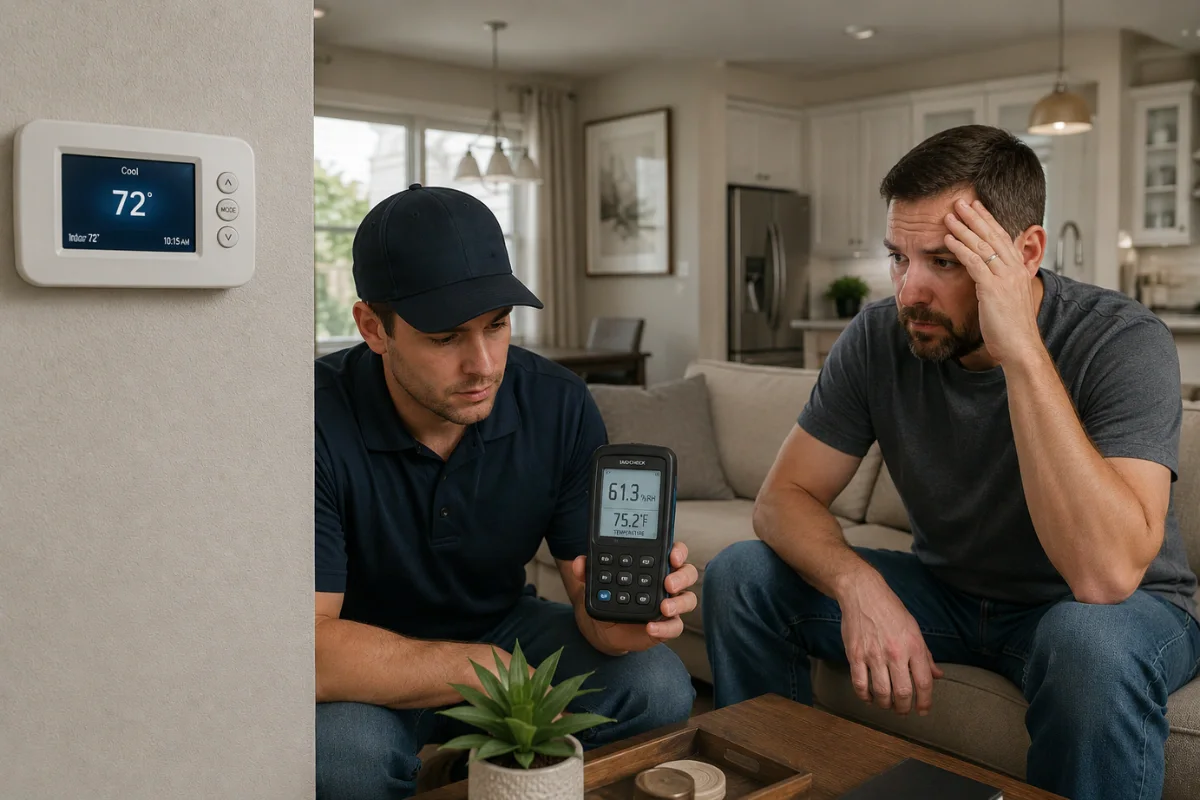
Houston homeowners struggle with humidity almost year-round. In fact, the city’s average relative humidity often exceeds 70%, while indoor humidity should be around 30% to 50% for optimal comfort and air quality. Once moisture climbs above that range, your home can start to feel sticky, stuffy, and much warmer than the thermostat indicates.
An environment like that puts extra pressure on the HVAC system. That’s why you may sometimes experience short cycling or breakdowns due to humidity.
It may not look serious at 1st but it can be a serious issue later. So, before it costs you $1000, call HVAC technicians like the Chill Brothers.
| TL;DR Houston’s high outdoor humidity often causes indoor moisture problems that your AC may struggle to control. If your system is short cycling, oversized, or has airflow or refrigerant issues, it won’t remove humidity properly. Simple fixes like filter changes and fan settings help, but persistent humidity issues often require professional HVAC diagnosis to identify the root cause. |
What Is the Ideal Indoor Humidity Level for Houston Homes?
The ideal indoor humidity level for Houston homes is between 30% and 50%, with around 45% providing the best balance of comfort and indoor air quality. The Gulf Coast humidity keeps moisture levels within this range, which helps prevent mold growth.
Reduce dust mites and keep your home feeling comfortable. It also helps your air conditioner run more efficiently, rather than working overtime to manage excess moisture in the air.
But Houston weather didn’t stay like this any time!
According to environmental health experts, mold growth can begin when indoor humidity remains above 60% for extended periods.
The excess moisture can also damage wood flooring, furniture, paint, and drywall over time. That’s why your thermostat can read 72°F, but your home still feels damp and uncomfortable. In many cases, the AC is cooling the air but not removing enough moisture.

Why Does My House Feel Humid Even When the AC Is Running?
Your air conditioner removes moisture only when it’s actively cooling. If the system shuts off too quickly, runs into airflow restrictions, or doesn’t complete a full cooling cycle,
it won’t have enough time to pull excess humidity from the air. Problems like short cycling, dirty air filters, and poor airflow can all leave your home feeling cool but still damp and uncomfortable.
This usually happens because of an oversized AC unit, a dirty air filter, low refrigerant levels, a frozen evaporator coil, clogged drain lines, or poor airflow throughout the system.
A properly functioning air conditioner should lower both the temperature and humidity levels in your home. So, when something interferes with that process, moisture stays trapped indoors. As a result, your home can feel sticky, damp, or uncomfortable even when the thermostat shows the correct temperature.
Signs Your AC Is Not Removing Gulf Coast Humidity Properly
Sometimes your AC is running exactly as it should, or at least it seems that way. We got many, many complaints saying ‘ My AC is short cycling’ while there are humidity problems. People tend to mix those 2 things up.
That’s why whenever we get calls in Gulf Coast humidity day, our team asks homeowners about a few signs like-
- A sticky or damp feeling inside the house, even when the AC is running
- Rooms feel warmer than the thermostat setting
- Condensation forming on windows or glass doors
- Musty odors coming from vents or certain areas of the home
- Uneven temperatures between rooms
- Visible mold or mildew growth around vents, walls, or ceilings
- Increased allergy or respiratory symptoms indoors
- Higher energy bills without a change in cooling habits
If 3\4 of the signs are visible, it’s important to take action immediately. Cause The longer these humidity problems go untreated, the harder your AC has to work to keep your home comfortable.
That’s why we recommend having the system checked before excess moisture leads to mold growth, poor indoor air quality, or costly HVAC repairs.
Common AC Problems Caused by Houston Humidity
Houston’s humidity doesn’t just make people uncomfortable, it can also create problems for your air conditioning system. Since your AC has to remove both heat and moisture from the air, Gulf Coast humidity forces it to work harder and longer than it would in a drier climate.
Over time, all that extra moisture can lead to several HVAC issues.

Frozen Evaporator Coils
A frozen evaporator coil happens when moisture builds up faster than the system can properly remove it. In humid conditions, this worsens when airflow is restricted or refrigerant levels are low. Once ice forms, your AC cannot cool the home properly.
You will usually notice signs like weak airflow from vents, warm air instead of cool air, and visible ice on the indoor unit. And you will also see a sudden rise in energy bills as the system struggles to run.
Clogged Condensate Drain Line
Your AC removes humidity by collecting water and sending it out through a drain line. In Houston’s moist climate, that line fills up quickly with algae, dirt, and debris. When it clogs, water has nowhere to go.
This often shows up as water leaking around the indoor unit, a musty smell near vents, increased indoor humidity, or even small water stains around the system.
Mold and Mildew Growth
High humidity creates the perfect environment for mold and mildew inside your HVAC system and ductwork. Once moisture levels stay elevated for too long, spores can start spreading quietly through the system.
Homeowners usually notice a persistent musty odor, allergy flare-ups, visible mold near vents, or overall poor indoor air quality that doesn’t improve even when the AC is running.
Rust and Corrosion on HVAC Components
Constant exposure to moisture accelerates corrosion in your HVAC system. Over time, humidity can damage coils, electrical connections, and metal components. This can result in refrigerant leaks, electrical issues, reduced system performance, and higher long-term repair costs if left unaddressed.
Poor Indoor Air Quality
When humidity remains high indoors, air quality quickly drops. Moist environments allow allergens and irritants to spread more easily throughout the home.
You may experience stronger allergy symptoms, more dust mites, respiratory irritation, and a general feeling of discomfort even when the temperature is correct. If you figure out before then, it’s best to get an indoor air quality service.
If you want to stay comfortable even in Gulf Coast humidity, it’s best to call an HVAC expert in Houston or have an HVAC system installed.
How to Lower Indoor Humidity Between HVAC Visits?
To control indoor humidity between HVAC service visits, a mix of thermostat settings, airflow habits, and moisture control practices can make a big difference. These small adjustments help your AC work more smoothly.
We recommend doing those things for homeowners:
Optimize Your Central AC
See if your system is set up to manage humidity correctly. Set your thermostat fan to “Auto” instead of “On”. So, moisture isn’t continuously blown back into your home between cycles.
Then replace or clean your air filter every 1–3 months to maintain proper airflow and support moisture removal. When the fan is left on “On,” moisture that collects on the coils can get recirculated indoors, making the air feel more humid.
Control Moisture at the Source
Reducing moisture before it spreads is one of the most effective ways to manage indoor humidity. Here is how you can do that:
- Run bathroom exhaust fans for 20–30 minutes after showers
- Use the kitchen range hood while cooking or boiling water
- Keep pots covered to reduce steam release during cooking
- Limit excess indoor moisture from houseplants or move them outdoors if needed
These small habits prevent moisture from building up in the first place.
Improve Indoor Airflow
Good airflow helps your AC distribute dry, conditioned air more evenly throughout the home. So, keep interior doors open to prevent damp, stagnant air pockets. Then run ceiling fans in the summer (counterclockwise) setting to improve air circulation and comfort
This will prevent vents from being blocked by furniture or curtains. And you will have better airflow, which helps reduce humidity buildup in closed-off areas.
Use Supplemental Air Purifier
Your AC alone may not be enough in some areas of your home, especially during peak Houston humidity. So, use a portable air purifier in high-moisture spaces like bathrooms, laundry rooms, or basements.
Those will help you maintain indoor humidity levels between 40% and 50% RH for optimal comfort and air quality. This extra layer of control helps stabilize humidity when outdoor conditions are extreme. A good air purifier will keep your indoor humidity under control.
When to Call an HVAC Professional for Indoor Humidity Problems?
Humidity problems can sometimes start small, but they don’t stay small for long in Houston’s climate. If your AC is struggling to keep moisture under control, it usually means something deeper is going on in the system that needs professional attention.

You should call an HVAC technician if you see:
- Humidity consistently stays above 60%, even when the AC is running regularly
- Visible mold or mildew starts appearing around vents, walls, or HVAC areas
- The AC runs almost constantly without properly improving comfort
- Indoor air feels sticky, damp, or heavy even after long cooling cycles
- Water leaks appear around the indoor unit or HVAC equipment
- Humidity issues keep coming back, even after basic DIY fixes like filter changes or thermostat adjustments
If you’re noticing more than one of these signs at the same time, it’s usually a clear indicator that your system needs a full professional inspection rather than temporary fixes. So, you should definitely call the best HVAC company in Houston to fix the problem.
How Much Does It Cost to Fix AC Humidity Problems?
Fixing AC humidity problems typically costs between $100 and $650. But still, depending on what’s causing the issue, as in:
| Problem | Average Cost |
| Air Filter Replacement | $5–$30 |
| Drain Line Cleaning | $75–$250 |
| Thermostat Repair/Replacement | $100–$500 |
| Refrigerant Leak Repair | $200–$800 |
| Evaporator Coil Repair | $600–$2,000 |
| Ductwork Repair | $300–$2,000+ |
| Whole-Home Dehumidifier Installation | $1,500–$4,500+ |
Conclusion
High indoor humidity is one of the most common comfort issues Houston homeowners face, and it often points to an underlying HVAC problem rather than just “bad weather inside the house.”
Most of the time, the issue comes down to airflow problems, refrigerant imbalance, poor system sizing, or drainage issues that prevent your AC from removing moisture properly.
The Chill Brothers focus on finding the root cause and fixing it the right way. So, your home stays cool, dry, and comfortable, even in Houston’s toughest humidity. Whenever you need proper HVAC service in Houston, call us. We will arrive and fix all kinds of humidity issues.
Frequently Asked Questions
What humidity level is too high inside a home?
Anything above 60% indoor humidity is considered too high. At this level, homes start feeling sticky, and there’s a higher risk of mold growth and poor indoor air quality.
Why is my AC not removing humidity in Houston?
This usually happens when the system is short cycling, airflow is restricted, refrigerant is low, or the AC is oversized. In all these cases, the system doesn’t run long enough to properly pull out moisture.
Can an AC lower humidity on its own?
Yes, a properly working AC removes humidity while cooling. However, it only works well if the system is correctly sized, clean, and running full cycles.
Does running the fan on “On” increase humidity?
Yes. When the fan is set to “On,” moisture from the coils can get pushed back into the home between cooling cycles, making the air feel more humid.
Can high humidity damage my HVAC system?
Yes. Long-term humidity can cause mold growth, coil corrosion, drain clogs, and increased strain on system components, which can increase repair needs over time.
What is the fastest way to reduce indoor humidity?
Basic steps include setting the thermostat fan to Auto, replacing air filters, running exhaust fans, and using a dehumidifier in high-moisture areas.
Do I need a dehumidifier if I already have AC?
If your home still feels humid even when the AC is running properly, a whole-home or portable dehumidifier may be needed for better moisture control.
Why does my house feel humid at night?
At night, AC cycles may run less frequently, and humidity can rise indoors, especially in poorly ventilated or oversized systems.

I’m Francis Kaspar, a 35-year-old HVAC technician with over 10 years of experience in the industry. I hold a certification in HVAC technology from Texas State Technical College, where I gained hands-on skills that shaped my career.
Currently, I’m working at The Chill Brothers, specializing in AC installation, repair, and energy-efficient solutions. Outside of work, I enjoy spending time with my wife and two kids.
I’m also passionate about sharing my HVAC knowledge written by articles that provide practical tips and tricks for homeowners.