

How Long Do Air Conditioners Last? Learn About AC Lifespan and Maintenance Tips. Keep Cool Efficiently!
Regular usage takes its toll on air conditioners over time. Generally, they can last from 10 to 15 years. However, the lifespan can be influenced by various factors.
You can maintain your air conditioners well keeping these factors in mind. However, there are times when your AC needs complete replacement instead of a better replacement.
In this article, we will discuss the lifespan of your air conditioner, the factors that can affect the lifespan, how can you extend the lifespan, and when should you consider a replacement instead of repairs.
TL;DR
Air conditioners usually last 10-15 years, but this depends on factors like brand, maintenance, and usage. Regular care, such as professional check-ups and keeping filters clean, can help extend their life. Issues like compressor and motor failures, refrigerant leaks, and thermostat problems can reduce an AC’s lifespan. If your AC is old, breaks down often, or your electricity bills are high, you should replace it.. Watch for signs like weak cooling or loud noises as hints it may be time for a new unit.
Average Lifespan of an Air Conditioner
On average, air conditioners last between 10 to 15 years.
However, this number can hugely vary. The lifespan depends on several factors such as the brand, model, usage, and maintenance history.
Regularly serviced and well-maintained units tend to last longer. Meanwhile, neglected systems may experience a shorter lifespan.
Factors Affecting Air Conditioner’s Lifespan
Several factors can influence the longevity of your air conditioner:
- Maintenance: Routine maintenance by a professional HVAC technician is crucial to keep your AC in top condition.
Regular inspections, cleaning, and timely repairs can extend its lifespan significantly. - Usage: How often and heavily you use your AC can impact its lifespan.
Constantly running the unit at maximum capacity or using it extensively throughout the year may accelerate wear and tear. - Climate: Extreme climates, such as scorching summers or harsh winters, can put additional strain on your AC. The strain affects its longevity.
- Installation Quality: Proper installation by certified technicians ensures that your AC operates efficiently and may contribute to a longer lifespan.
- Brand and Build Quality: High-quality brands with better components often offer more reliable and longer-lasting air conditioners.
Additional factors such as voltage fluctuations and protection from pest attacks are also important factors.
Common AC Problems and Their Impact on Lifespan
While most of the air conditioner’s problems create efficiency issues, they damage the system in the long run. They are like a vicious cycle, each one worse than the last.
Some of the AC issues that directly or indirectly affect it are:
Compressor Issues
The compressor is the heart of an air conditioner system. The issues are generally caused by overloading, overheating, refrigerant leaks, or mechanical failures.
You can detect a compressor issue by identifying loud noises coming from it. The cooling will be reduced. Sometimes, the air conditioner will fail to run entirely.
Refrigerant Leaks
Corrosion, punctures, or loose connections in the refrigerant lines cause the refrigerants to leak. Refrigerant leaks can directly damage other components and air conditioner’s overall lifespan.
Blower Motor Failures
Blower motor failures can also cause complete failure of an AC. You can detect the problem from reduced airflow and unusual noises.
General wear and tear, overheating, or electrical problems can cause this issue.
Thermostat Malfunction
Thermostat malfunction can happen from mechanical issues, electrical problems, or improper calibration. You can identify the problem from inaccurate temperature readings, inconsistent operation, or failure to turn on or off.
Condenser Coil Issues
Dirt and debris pile up on condenser coils and hinder heat release in the outside environment. Corrosion can also contribute to the problem.
Always consult an expert technician like The Chill Brothers to properly diagnose the issue. Misdiagnosing or mistreating an issue can lead to other problems in the AC and other HVAC components as well,
Tips for Extending AC Lifespan
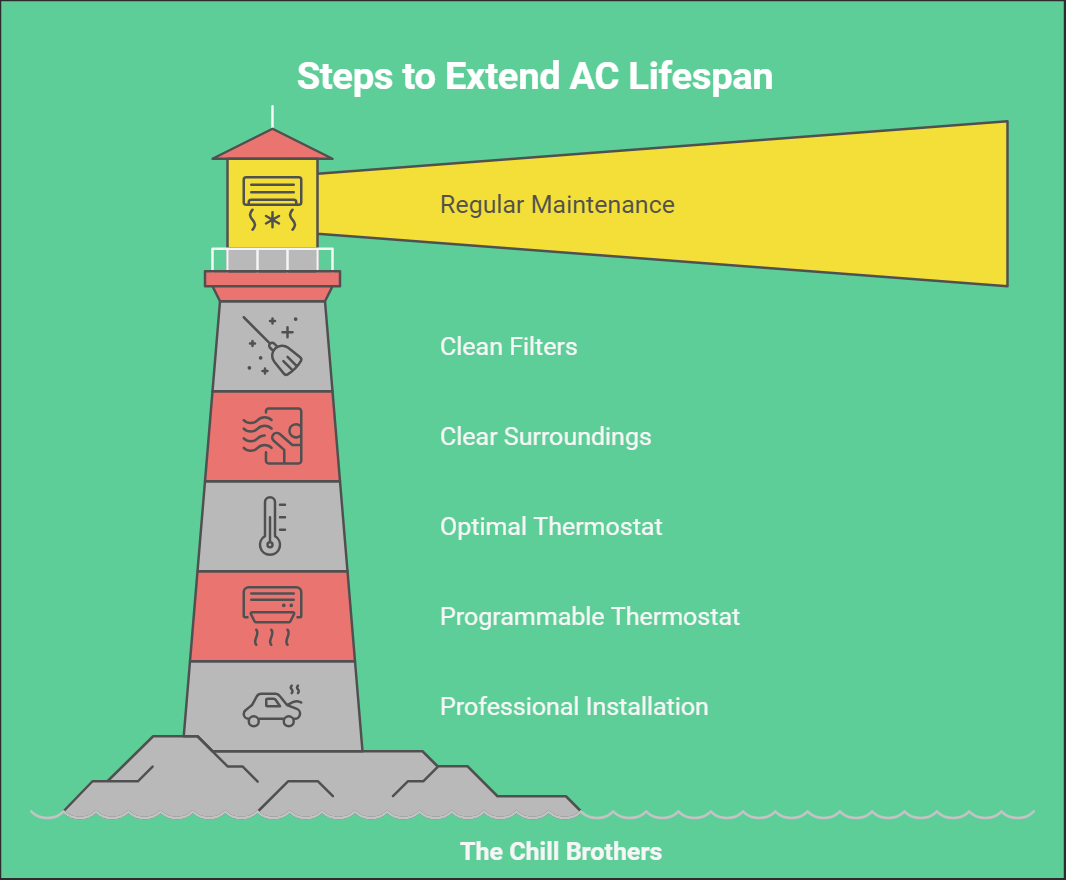
The air conditioner’s lifespan is nearly fixed. However, you can extend the lifespan with some good practices.
Follow these tips to maximize the lifespan of your air conditioner:
- Regular Maintenance: Schedule annual maintenance with a qualified HVAC technician to keep your AC running smoothly.
Remembering to ensure your system gets its regular maintenance can be challenging, which is why you should consider enrolling in The Chill Preventative Maintenance Plan! With this plan, you will receive bi-annual tune-ups, filter changes, servicing, and more! View the website or give the experts at The Chill Brothers a call today! - Clean and Replace Filters: Regularly clean or replace air filters every 1-2 months to improve airflow and prevent strain on the system.
- Keep the Surroundings Clear: Ensure there are no obstructions around the outdoor unit and keep it free from debris.
- Optimal Thermostat Settings: Avoid setting the thermostat too low. Instead, maintain a comfortable temperature to reduce strain on the unit.
- Programmable Thermostat: Consider investing in a programmable thermostat to optimize energy usage.
Looking to upgrade your thermostat? Then look no further! The Chill Brothers will install ANY smart thermostat for only $199! Give the experts a call for more information. - Professional Installation: If you need a new AC unit, invest in professional installation to ensure it operates efficiently from day one.
Repair vs. Replace
Replacing for minor issues can result in a waste of money. On the other hand, repeated repairs can quickly add up and overtake the price of getting a new one. So, deciding between replacing and repairing becomes a challenge.
As a general rule, you can follow these criteria to make the decision:
- If your AC is relatively new (less than 7-8 years old) and the repair cost is reasonable, opt for repairs.
- If your AC is older, and the repair costs are significant (50% or more of a new unit’s cost), it’s often more cost-effective to replace the unit with a newer, more efficient model.
- If you want to go straight for a more energy-efficient system, you can go for a new unit. It can save you money in the long run.
When to Replace Your AC
Knowing when it’s time to replace your AC can save you from sudden breakdowns and discomfort. Look out for these signs:
- Frequent Breakdowns: If your AC requires frequent repairs, it may be a sign that it’s reaching the end of its life.
- Inefficient Cooling: If your AC struggles to maintain the desired temperature or has reduced airflow, it might be time for a replacement.
- Escalating Energy Bills: As air conditioners age, they become less efficient, leading to higher energy consumption and increased utility bills.
- Excessive Noise: Unusual and loud noises during operation can indicate internal issues and may necessitate a replacement.
- Age: If your AC is approaching or surpassing the average lifespan, it’s worth considering a replacement even if it seems to be working fine.
Time for a replacement? The Chill Brothers are offering their $2,000 Buy Back Program where they will buy back your system for up to $2,000 when you upgrade with them. Please see the website for more details!
Conclusion
Your air conditioner’s lifespan is influenced by various factors, but with proper care and maintenance, you can extend its operational life. Regular servicing, timely repairs, and knowing when to replace the unit are essential for keeping your home cool and comfortable during the hot summer months.
Remember to follow the tips provided to maximize the longevity of your AC and get the most value out of your investment.
Frequently Asked Questions (FAQs)
- Can an AC unit last 30 years?
- It is unlikely that an AC system will last 30 years, especially in Texas. However, if you have the system regularly serviced, you could extend the system’s lifespan significantly.
- How often should I replace my air conditioner?
- Usually AC unit lifespans last 10-15 years. The system can last longer or shorter than that depending on its status and if it is still efficient at cooling and heating your home.
- Is it OK for my AC unit to run all day?
- Yes! There is nothing wrong with running your AC unit all day, but beware, if your system is not energy efficient, it could cause your energy bills to increase. Always watch out for weird noises, hot spots and increased energy bills when your system is running all day.
- How do I know if my air conditioner needs to be replaced?
- There are many signs that your AC unit needs to be replaced including but not limited to weird noises, hot spots, decreased air flow, air that is not cool and more. It is important to keep track of these signs and have a trained expert come look at the system.
- What time of year should you replace the AC unit?
- You can replace your AC unit anytime of the year, but ideally the perfect time is between September to November or March to mid May.
- What AC unit lasts the longest?
- Residential AC units last the longest, especially if they are properly maintained. You could get 15 years out of a single stage system.

I’m Francis Kaspar, a 35-year-old HVAC technician with over 10 years of experience in the industry. I hold a certification in HVAC technology from Texas State Technical College, where I gained hands-on skills that shaped my career.
Currently, I’m working at The Chill Brothers, specializing in AC installation, repair, and energy-efficient solutions. Outside of work, I enjoy spending time with my wife and two kids.
I’m also passionate about sharing my HVAC knowledge written by articles that provide practical tips and tricks for homeowners.





 Google
  Facebook
  Trustindex