
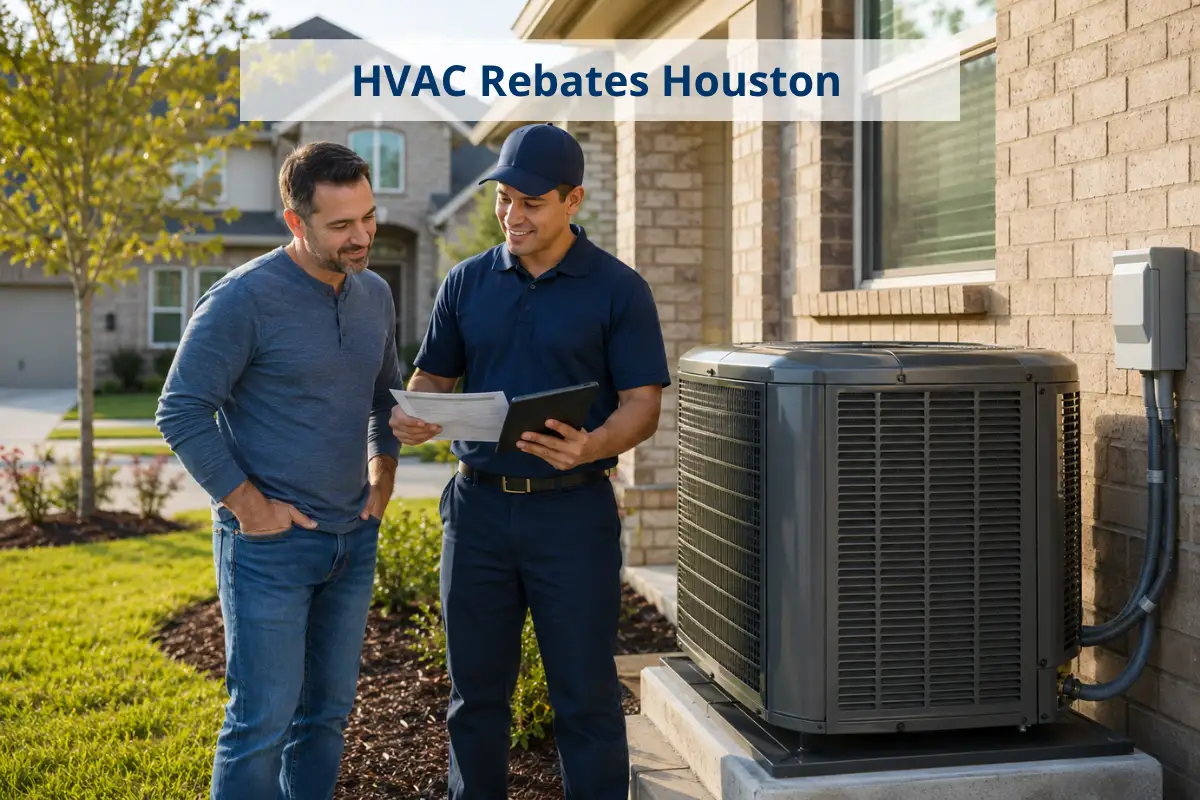
HVAC rebates are programs that help homeowners save money when they install a new energy efficient heating and cooling system. These savings can come from the federal government, local utility companies, or HVAC manufacturers.
The point of this program is to make upgrading to a more efficient system more affordable. It sill help homeowners reduce their energy use.
You may be able to save more than $2,600 in Houston. If you can combine available rebates, federal tax credits, and manufacturer offers. But yes, the amount depends on the system you choose.
Cause these incentives can significantly lower your installation cost. On top of that, a high efficiency HVAC system can help keep your home more comfortable and reduce your monthly energy bills for years to come.
TL;DR
|
Which HVAC Systems Qualify for Rebates?
Not every HVAC system qualifies for rebates or tax credits. In most cases, the equipment must meet minimum energy efficiency standards and be installed by a licensed HVAC contractor. Here are some basic systems that are suitable for the credit:
Central Air Conditioners
High efficiency central air conditioners are eligible for many utility rebates and federal tax credits. Most programs require the system to meet specific SEER2 efficiency ratings, so be sure to verify that the model meets those requirements before installation.
Heat Pumps
Heat pumps offer some of the largest incentives available in 2026. Because they provide both heating and cooling while using less energy, many federal and utility programs offer higher rebates for qualifying heat pump systems than for traditional air conditioners.
Ductless Mini Splits
Ductless mini splits can also qualify for rebates if they meet the required efficiency standards. They’re a great option for room additions, older homes without ductwork, or homeowners looking to cool specific areas more efficiently.
High Efficiency Furnaces
If you’re replacing an older gas furnace, installing a high efficiency model may qualify you for federal tax credits. Eligible furnaces must meet the required AFUE efficiency rating and program guidelines.
Smart Thermostats
Smart thermostats are one of the most affordable upgrades that may qualify for utility rebates. Besides lowering the upfront cost, they help reduce energy use by automatically adjusting your home’s temperature based on your schedule and preferences.
What HVAC Rebates Are Available in Houston for 2026?
Now homeowners can access HVAC rebates through local utility programs, federal tax credits, and manufacturer promotions. Each of them has a different kind of benefits, such as:

CenterPoint Energy Rebates
You automatically can be part of this program. If your home is served by CenterPoint Energy. The CenterPoint Energy Rebates program is made to encourage homeowners to upgrade to less energy intensive systems.
The main point is to reduce electricity demand. To qualify, you’ll need to install an ENERGY STAR® certified system through a participating contractor. Then you can have benefits like:
- Up to $500 toward a qualifying high efficiency central AC or heat pump
- $75 rebate for installing an eligible smart thermostat
- Lower upfront installation costs
- Reduced monthly energy bills thanks to higher efficiency equipment
Federal Energy Tax Credits
The federal government offers the Section 25C Energy Efficient Home Improvement Credit to encourage homeowners to invest in energy efficient HVAC systems. Unlike a rebate, this incentive is claimed when you file your federal income taxes.
To qualify for the federal energy tax credit, your new equipment must meet certain energy efficiency standards set by the federal government and the Consortium for Energy Efficiency (CEE). Most qualifying systems are also ENERGY STAR® certified.
Here are the general requirements for the most common HVAC systems:
- Air source heat pumps: Must meet the highest CEE efficiency tier. For most split systems, this typically means a SEER2 rating of at least 15.2 and an HSPF2 rating of 7.5 or higher.
- Central air conditioners: Must meet the highest applicable CEE tier. In many regions, qualifying split systems generally need a SEER2 rating of 16 or higher.
- Gas furnaces: Must have an AFUE rating of 97% or higher and be ENERGY STAR certified.
Only then can you get:
- Up to $2,000 in tax credits for qualifying heat pumps
- Up to $600 for eligible high efficiency central air conditioners
- A tax credit worth 30% of the installation cost, up to the program limits
- Long term savings from a more energy efficient system
Manufacturer Rebates
Many HVAC manufacturers run special promotions throughout the year to make their systems more affordable. These rebates are usually available on select models and often change with the season. Ask your HVAC contractor if the equipment you’re considering qualifies for any current manufacturer offers.
Possible benefits include:
- Rebates ranging from $150 to more than $1,600
- Savings on premium, high efficiency HVAC systems
- Opportunities to combine these offers with utility rebates and federal tax credits
- Lower overall replacement costs
HOMES and HEAR Rebate Programs
The federally funded HOMES and HEAR rebate programs are expected to become available in Texas later in 2026. Yes, these programs aren’t open yet, they’re made to help homeowners complete energy efficient home upgrades. Those additional assistance available for qualifying low and moderate income households.
Once the programs launch, eligible homeowners may receive:
- Up to $8,000 for qualifying energy efficiency improvements
- Up to $14,000 for eligible electrification projects
- Additional savings for income qualified households
- Lower upfront costs for major home energy upgrades
When Do Homeowners Get HVAC Rebates In Houston?

Houston homeowners can start taking advantage of HVAC rebates as soon as they install a qualifying high efficiency heating or cooling system. If you qualify for a utility rebate, it’s typically issued as a check or applied as a bill credit within 4 to 8 weeks. Just after your participating HVAC contractor completes the installation and submits the required paperwork.
But to get the benefits, you need to have a few things, such as:
- Receive up to $500 for installing a qualifying high efficiency heat pump or central air conditioner, plus additional rebates on eligible smart thermostats. Once your participating contractor submits the required paperwork. Then, rebates are typically issued as a check or a bill credit within 4 to 8 weeks.
- HVAC brands like Trane, Carrier, and American Standard often run seasonal promotions that can save homeowners anywhere from $150 to more than $1,600, depending on the equipment and time of year.
- Homeowners can claim up to $2,000 for qualifying heat pumps or up to $600 for eligible high efficiency central air conditioners. This incentive is claimed when you file your federal income tax return for the year the system was installed.
If your new HVAC system qualifies, you may even be able to combine utility rebates, manufacturer offers, and federal tax credits to maximize your total savings.
Available HVAC Rebates, Tax Credits & Incentives in Texas
| Program | Equipment | Max Savings | Available Now? | Who Qualifies? |
| CenterPoint Energy | Central AC, Heat Pump, Smart Thermostat | Up to $500 | Yes | CenterPoint customers with qualifying ENERGY STAR® equipment |
| Federal Tax Credit (25C) | Heat Pump, Central AC | Up to $2,000 | Yes | Homeowners installing eligible high efficiency systems |
| Manufacturer Rebates | Select HVAC Systems | $150–$1,600+ | Yes | Varies by brand and model |
| HOMES Program | Energy Efficient HVAC Upgrades | Up to $8,000 | Coming Soon | Eligible Texas homeowners |
| HEEHRA Program | Heat Pumps & Home Electrification | Up to $14,000 | Coming Soon | Income qualified households |
HVAC Rebates Based on HVAC System In Houston, Texas
| HVAC Upgrade | Typical Rebate |
| High Efficiency Central AC (16+ SEER2) | $300–$600 |
| Heat Pump (16+ SEER2) | $400–$1,500+ |
| Duct Sealing & Attic Insulation | $250–$750 |
| Manufacturer Rebates | $150–$1,600+ |
Note: Many of these incentives can be combined. Depending on the equipment you install and the programs you qualify for. So, you may be able to stack utility rebates, manufacturer promotions, and federal tax credits to maximize your total savings.
How to Apply for HVAC Rebates in Houston?
Here is how you can get a rebate in Houston:

Step 1: Check Which Rebates You Qualify For
Before buying a new HVAC system, find out which rebates and tax credits are available in your area. You may qualify for utility rebates, federal tax credits, manufacturer promotions, or multiple incentives at the same time.
Step 2: Choose a Qualifying HVAC System
Select an ENERGY STAR® certified air conditioner, heat pump, or other high efficiency HVAC system that meets the rebate program’s efficiency requirements. Not every model qualifies, so confirm eligibility before purchasing.
Step 3: Hire a Licensed HVAC Contractor
Most rebate programs require the system to be installed by a licensed or participating HVAC contractor. They can also help you choose eligible equipment and complete any required paperwork.
Step 4: Keep Your Installation Documents
Save your purchase receipt, installation invoice, warranty information, and any other documents your contractor provides. You’ll need these when applying for rebates or claiming tax credits.
Step 5: Submit Your Rebate Application
Complete and submit the required rebate forms along with any supporting documents before the application deadline. Some contractors will handle this step for you, while others may ask you to submit the paperwork yourself.
Step 6: Claim Your Federal Tax Credit
If your HVAC system qualifies for the Section 25C Energy Efficient Home Improvement Credit, claim it when you file your federal income tax return for the year the system was installed.
Step 7: Receive Your Savings
Utility rebates are typically issued within 4 to 8 weeks after your application is approved. Federal tax credits are applied when your tax return is processed, helping reduce the amount of tax you owe.
Conclusion
A new HVAC system doesn’t have to cost as much as you think. You can save thousands on your installation while enjoying lower energy bills for years to come with rebate benefits.
Before you move forward, check which incentives you qualify for and choose a system that meets the requirements. A little planning now can lead to big savings later.
Frequently Asked Questions
Can I combine HVAC rebates with financing?
Yes. Most HVAC rebates and federal tax credits can be used alongside financing options. This allows you to reduce your upfront cost while spreading the remaining balance into affordable monthly payments.
Do HVAC rebates apply to replacement systems only?
Not always. Some rebate programs are available for both new installations and system replacements, while others apply only to replacing an existing HVAC unit. Always check the eligibility requirements before purchasing.
Do renters qualify for HVAC rebates?
In most cases, no. HVAC rebates are generally available to homeowners because they own the equipment being installed. However, landlords replacing HVAC systems in rental properties may qualify for certain incentive programs.
How long do HVAC rebate programs last?
Many rebate programs are available year round, but funding is often limited. Manufacturer promotions may also change throughout the year, so it’s a good idea to apply as soon as your new system is installed.
Will replacing my HVAC system increase my home’s value?
A new, energy efficient HVAC system can make your home more attractive to buyers. While the exact return varies, many homeowners recover a portion of the installation cost through increased home value and lower operating expenses.
What happens if my HVAC system doesn’t meet the rebate requirements?
If your equipment doesn’t meet the required efficiency standards or isn’t installed according to the program guidelines, your rebate or tax credit application may be denied. That’s why it’s important to verify eligibility before installation.
Is a heat pump worth installing in Houston?
For many homeowners, yes. Houston’s mild winters and long cooling season make heat pumps an efficient option. They provide both heating and cooling while qualifying for some of the highest rebates and federal tax credits available.
Should I replace my ductwork when installing a new HVAC system?
Not every home needs new ductwork, but it’s worth having it inspected. Leaky, damaged, or poorly sized ducts can reduce your new system’s efficiency and prevent it from performing as expected.

I’m Francis Kaspar, a 35-year-old HVAC technician with over 10 years of experience in the industry. I hold a certification in HVAC technology from Texas State Technical College, where I gained hands-on skills that shaped my career.
Currently, I’m working at The Chill Brothers, specializing in AC installation, repair, and energy-efficient solutions. Outside of work, I enjoy spending time with my wife and two kids.
I’m also passionate about sharing my HVAC knowledge written by articles that provide practical tips and tricks for homeowners.



 Google
  Facebook
  Trustindex