As the winter chill sets in, the last thing you want is for your furnace to refuse to kick on. Before attempting any costly repair, it’s worth trying some troubleshooting tips to get your system back on track.
In this comprehensive guide, we’ll go through the most practical troubleshooting tips when your furnace isn’t starting based on the most common reasons behind it.
TL;DR
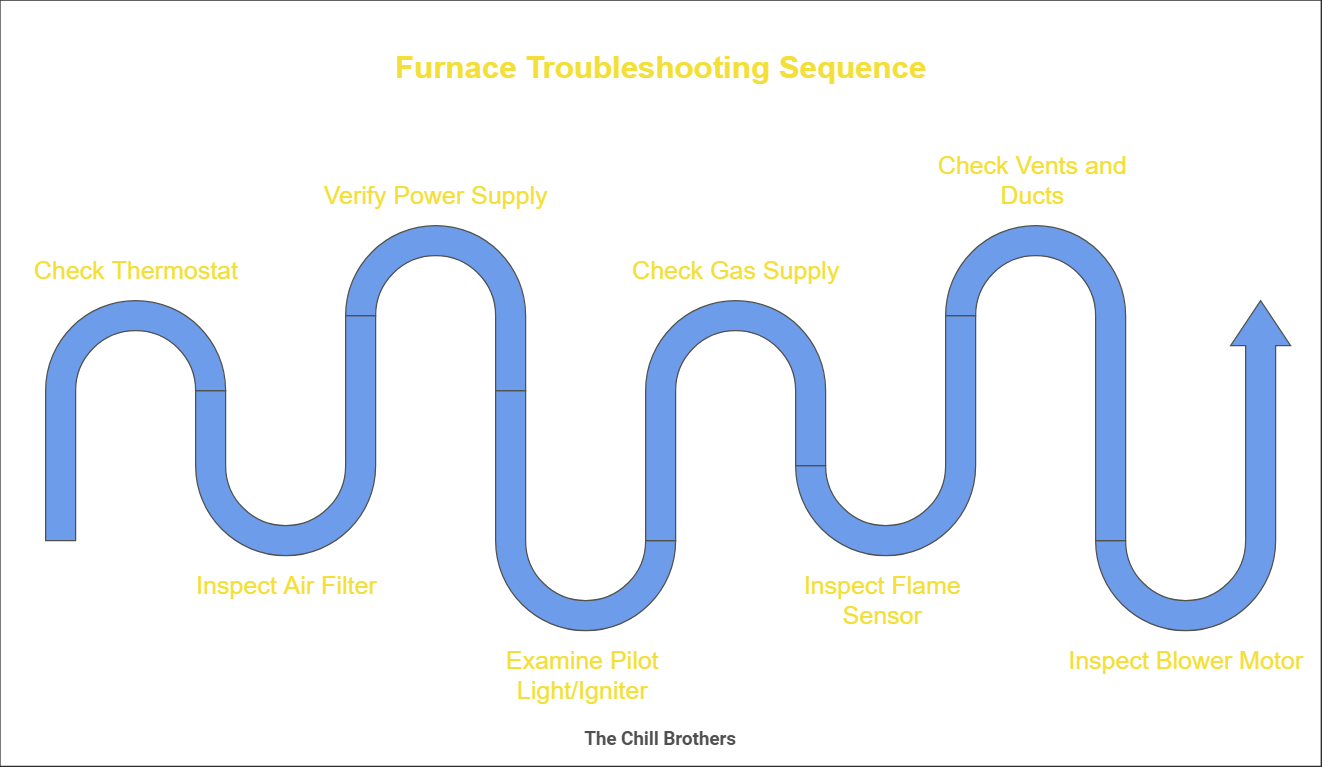
If your furnace won’t start, first check the thermostat settings and replace the batteries if needed. Next, inspect the air filter for dirt and replace it if clogged. Make sure the furnace has power by checking the circuit breaker and switches. If it has a pilot light or igniter, ensure it’s working properly. Also, verify that the gas valve is open and clean the flame sensor. Finally, look for obstructions in vents or ducts and listen for unusual sounds from the blower motor. If these steps don’t help, consider calling a professional.
1. Check the Thermostat When Your Furnace Won’t Kick On:
The thermostat is the command center for your furnace. Make sure you have set it to the desired temperature and in the “heat” mode.
If your thermostat has batteries, replace them to rule out any potential power issues. Dust and debris that accumulate over time affect the thermostat’s performance. Take a moment to clean the thermostat and observe if your furnace responds to the adjusted settings.
Sometimes upgrading the thermostat when it isn’t turning on is the right solution. The Chill Brothers are offering ANY smart thermostat installation for $199! That includes any smart thermostats including Ecobee, Lennox, and Honeywell. Give them a call or visit their website if you intend to replace your thermostat.
2. Inspect the Air Filter
Air filters are often overlooked, but they are critical for furnace health. A clogged or dirty air filter disrupts airflow. Blocked airflow causes the furnace to overheat and automatically shut down.
Check the air filter and its condition. If there is too much dust on it, change it. You need to change the air filter if it has already expired the manufacturer’s time recommendations too.
Regularly check up on the air filter for general maintenance too. This simple maintenance task can prevent unexpected shutdowns more often. For more information regarding air purification, please visit The Chill Brothers website.
3. Verify the Power Supply
A lack of power is a common culprit when a furnace refuses to kick on. Begin by checking the circuit breaker to ensure it hasn’t tripped. If it has, reset it and attempt to turn on the furnace again.
In addition to that, inspect the furnace’s power switch. Confirm that the switch is in the “on” position. For furnaces connected to an outlet, ensure the plug is securely inserted.
4. Examine the Pilot Light or Igniter
Pilot light is a feature of older gas-fired furnaces. The pilot light ignites the main gas burner. It goes out for many reasons and stops the furnace from igniting.
Modern furnaces use electronic igniters instead of pilot lights.
Check your pilot light or electronic igniters for any signs of malfunction. If you attempt to relight yourself, follow the manufacturer’s instructions. It is always safer to contact a professional in these cases.
5. Check the Gas Supply
Some furnaces run on natural gas or propane. A disrupted gas supply in these devices leads to ignition failure.
Make sure that the gas valve supplying the furnace is open. If you’re uncertain or suspect a gas leak, Contact a professional immediately for assistance and avoid attempting repairs on your own.
The professionals at The Chill Brothers are always ready to inspect your furnace and find the root cause of it not kicking on. They provide repair services in The Woodlands and other areas.
6. Inspect the Flame Sensor
The flame sensors make sure your burners are lit. Dirt and carbon buildup can pile up on the flame sensor over time. This incident can hinder the sensor’s functionality.
Gently clean the flame sensor. Use a fine abrasive pad to remove any debris. This small step often resolves issues with the furnace not staying on.
7. Check for Blocked Vents and Ducts
You can visually inspect the supply and return vents. Supply vents are located on walls or ceilings. You will find return vents near the floor.
Look for obstructions near these vents. Furniture, curtains, or rugs can obstruct these vents.
If possible, check the ductwork in the attic or crawl space for dents, kinks, or leaks. Debris can work as an obstruction in the ductwork.
Clean the ducts if they are clogged. You can consider professional cleaning to get the most out of it. Hire a professional if you discover any damage in the ductwork.
8. Inspect the Blower Motor
The blower motor distributes the heated or cooled air throughout your home.
Listen for any unusual noises or vibrations coming from the blower motor. Some noise is fine, but excessive sound is a sign of a problem. The motor can also make grinding or squeaking sounds for mechanical issues.
Another thing to look for is the distribution of airflow.
Check if the heated or cooled air is evenly spread throughout your house. Lubricate and inspect the belt depending on your blower motor type. Consult with a qualified technician if you can’t diagnose or resolve the issue.
Conclusion
We all want an operating and efficient furnace during the colder months. By following these comprehensive tips, you can effectively diagnose and resolve common problems with your furnace.
A systematic troubleshooting approach can help identify and address the underlying issues when your furnace refuses to kick on. Remember, if you encounter issues beyond your expertise, seeking professional assistance is the best course of action.

I’m Francis Kaspar, a 35-year-old HVAC technician with over 10 years of experience in the industry. I hold a certification in HVAC technology from Texas State Technical College, where I gained hands-on skills that shaped my career.
Currently, I’m working at The Chill Brothers, specializing in AC installation, repair, and energy-efficient solutions. Outside of work, I enjoy spending time with my wife and two kids.
I’m also passionate about sharing my HVAC knowledge written by articles that provide practical tips and tricks for homeowners.